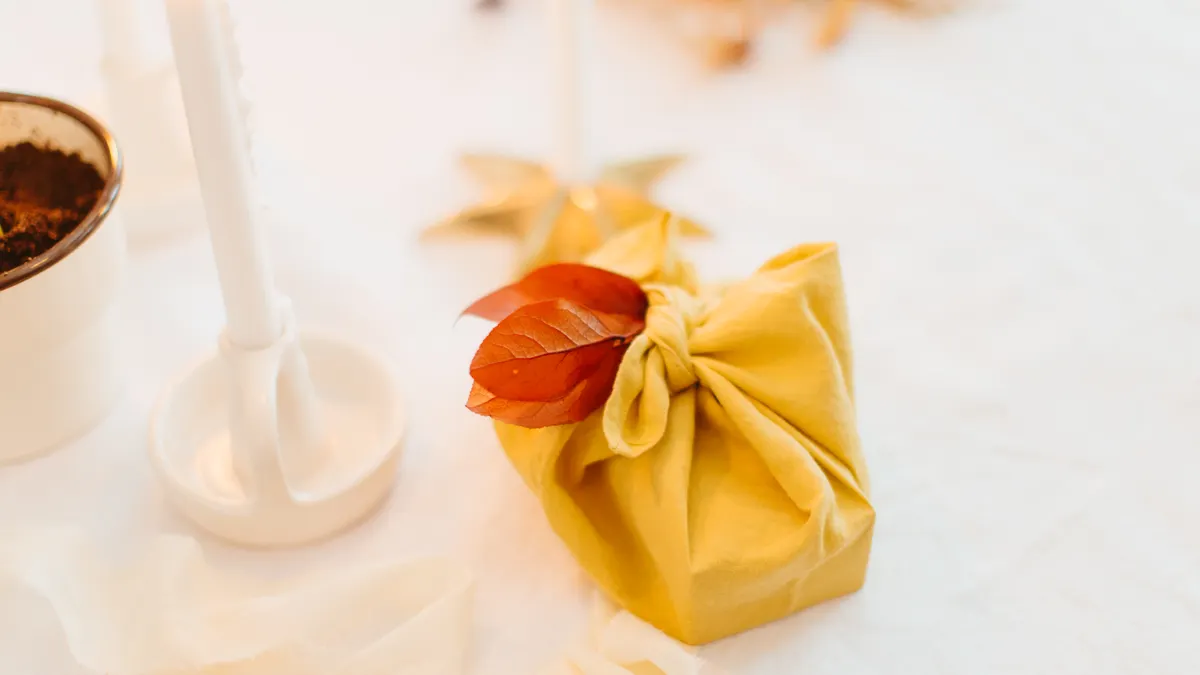
How to Wrap a Gift in Fabric
Last updated: October 27, 2026
Quick Answer: How to wrap a gift in fabric usually takes 2 to 5 minutes for a box about 20 cm wide, and a 70 cm to 90 cm square cloth is a practical starting size for many small and medium gifts. Fabric gift wrapping gives you a reusable way to dress a present, and it works best when you start with the right cloth, the right size, and one simple knot. If you want a clean finish without tape, this guide shows how to wrap a gift in fabric with furoshiki wrapping, a gift box setup, and the most common knots.
What fabric gift wrapping changes, and when it makes sense
Fabric gift wrapping replaces disposable wrapping with a cloth wrap you can tie, reuse, or pass on with the gift. It is a good choice when you want a reusable alternative, when the present is an odd shape, or when the wrapping itself is part of the presentation. A square scarf, a cotton cloth, or a dedicated furoshiki cloth can all work.
This method is not ideal for every gift. A rigid gift box is easier to wrap neatly than a very soft item, because the box gives the cloth edges to grip. A tiny item can disappear in a large wrap unless you add tissue, a small box, or a padding layer. If you need a sharp, formal look with crisp corners, paper still wins. If you want speed, fabric usually takes a few extra minutes the first time.
The biggest advantage is reuse. A 70 cm to 90 cm square cloth is large enough for many small and medium gifts, and a larger cloth handles a shoebox-size item more comfortably. Unlike paper, fabric can be folded back up and used again. That makes it a strong option for eco-friendly wrapping and for gifts that will travel home in a bag.
There is one trade-off to keep in mind: fabric can shift if you choose a slippery weave such as satin. Cotton, linen, and canvas often hold knots better and forgive mistakes. If you are wrapping something heavy or awkward, a firmer cloth is easier to control than a drapey scarf.
What you need first
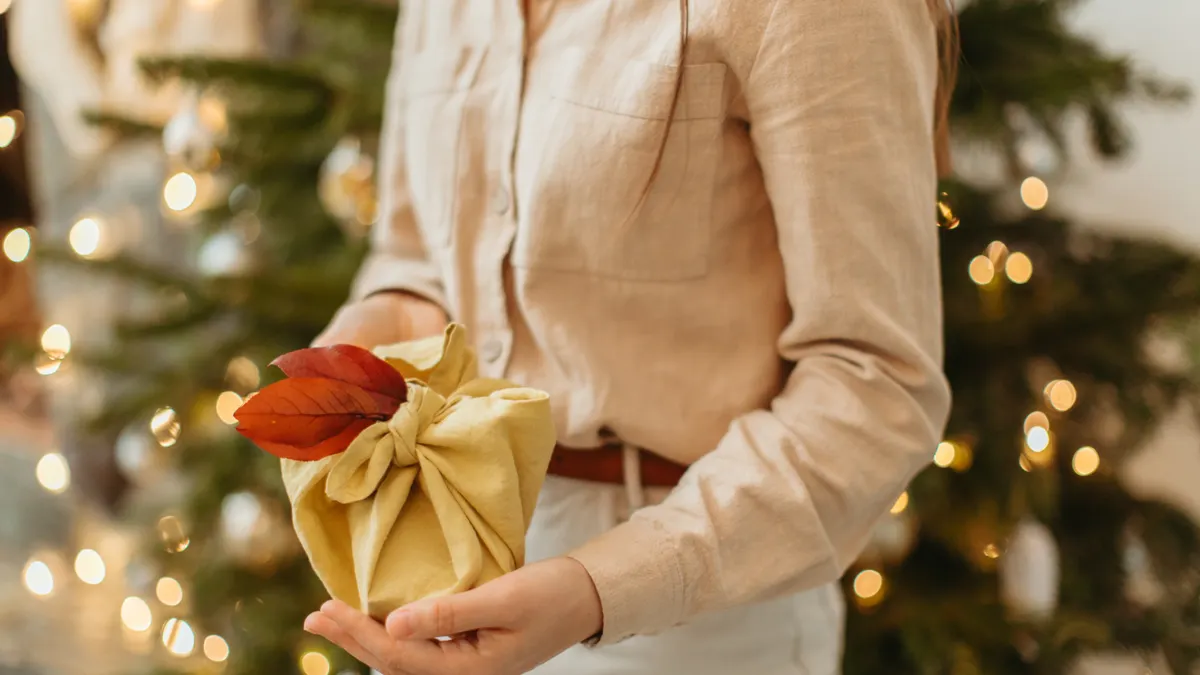
You need a square or nearly square piece of fabric, the gift itself, and, for some styles, a small gift box. A ribbon is optional, but it helps if you want an extra tie or a decorative finish. For a simple wrap, aim for cloth that extends well beyond the gift on all sides; a square at least 20 cm larger than the gift’s widest point is a practical starting rule.
Choose the cloth by the job it has to do. A 50 cm square can cover a very small box. A 70 cm to 90 cm square is a more versatile size for books, candles, and compact boxes. A larger cloth, around 100 cm or more, gives you more room to knot cleanly around bulky items. If the item is fragile, place it in a box first so the wrap has a stable shape.
Use a flat surface, such as a table, because fabric is easier to center and fold when the gift is level. If the cloth wrinkles badly, a quick press with an iron makes the folds cleaner, but it is not required. The point is not perfection; it is enough overlap to tie the corners without strain.
For a furoshiki cloth, the square shape matters because the wrap depends on symmetrical corners. For a scarf, check that the corners are strong and the fabric is not so loose that the knot will stretch. If the weave is very slick, a double knot or a ribbon finish helps.
How to wrap a gift in fabric, step by step
You wrap a gift in fabric by centering the gift, bringing opposite corners together, and tying the remaining corners into a secure knot. For a box about 20 cm wide, the process usually takes 2 to 5 minutes once you know the folds.
-
Lay the fabric flat with the wrong side up, then place the gift in the center.
You should see equal fabric margins on all sides, with the gift sitting squarely in the middle. If one corner is much shorter than the others, shift the gift now rather than fixing it later. -
Bring two opposite corners up and over the gift.
The cloth should cover the top face and meet above the center line. On a rectangular box, this creates the first clean diagonal and keeps the wrap from sliding. -
Cross those corners and tie them into a simple knot.
Tighten until the fabric grips the box but does not crush it. The top should look neat, with the knot sitting just above the center rather than off to one side. -
Fold the remaining two corners upward toward the knot.
Their edges should flatten smoothly against the sides of the gift. If the fabric bunches, smooth it out with your palms before tying. -
Tie the second pair of corners into a square knot or bow.
A square knot often lies flatter than a bulky double bow and works well for most cotton or linen cloths. You should end with a stable top knot and two tidy tails. -
Tuck or trim the tails so the wrap looks balanced.
The finished package should sit flat on the table without opening itself. If one tail is much longer, retie the knot closer to the center or fold the tail under before the final pull.
For a gift box, this is the cleanest approach. The box keeps the edges crisp, and the fabric ends form a visible decorative top. If you are wrapping a softer object, put it in a box first unless you want a looser, bundle-style look.
How do you tie a furoshiki wrap?
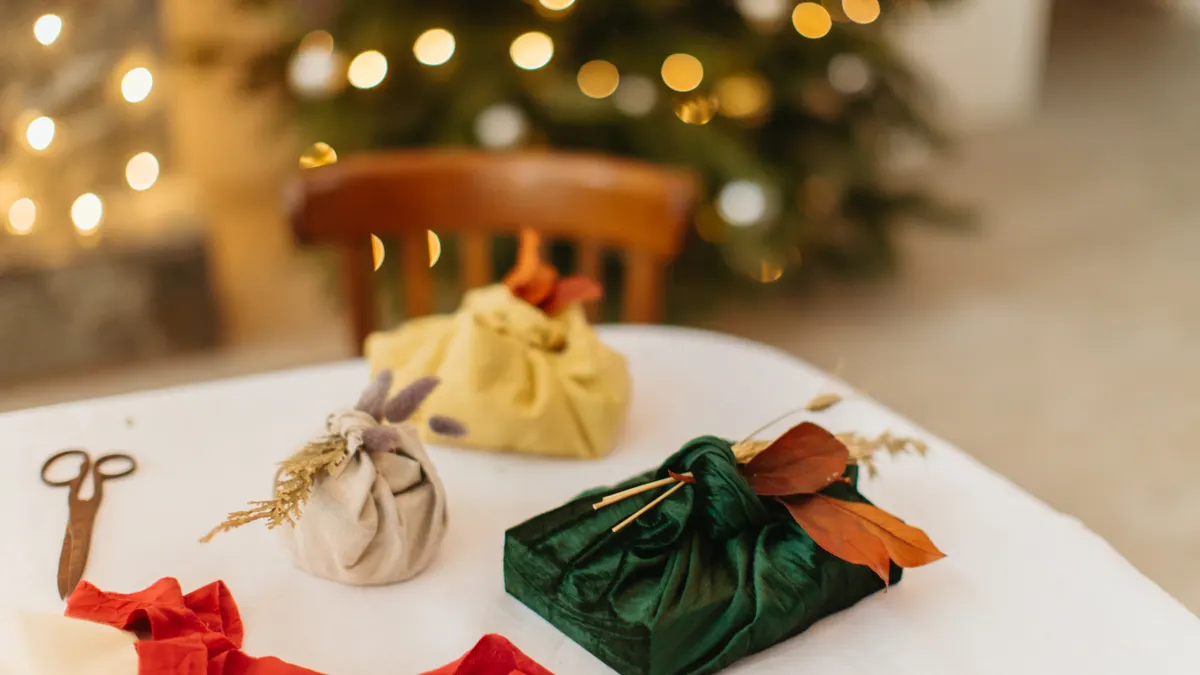
You tie a furoshiki wrap by matching the knot to the cloth and the shape, then pulling the corners snug so the package holds its form. The standard furoshiki approach uses a square cloth and one of a few common knots: a basic knot, a double knot, or a bow-like tie for decoration.
The basic knot is the workhorse. Cross two corners, pull them tight, and tie once. Then take the remaining corners and tie a second knot above or beside the first. This gives a compact closure for a small gift in a box, especially when the cloth is cotton or another grippy weave.
A double knot is better when the gift will be carried in a bag or handed over in transit. Make the first knot, then repeat the same move a second time with the same pair of corners. The finish is less decorative than a ribbon bow, but it stays put. That matters more than looks for heavier items, such as a hardcover book or a candle box.
A bottle or very long object needs a different layout, and a square cloth can still handle it if you position the item diagonally and let the corners cross over the body. The package ends up looking more like a wrapped bundle than a neat cube. That is normal. Furoshiki wrapping is flexible, not rigid.
If the knot looks bulky, the cloth is probably too thick or the corners are too short. In that case, swap to a larger size or choose a thinner weave. The goal is a knot that sits flat enough to hold the gift without making the top look lumpy.
For a clear reference on traditional cloth wrapping methods, the Japan Furoshiki Association is a useful source to look up by name, and the Japan Ministry of the Environment also publishes furoshiki guidance. The point is not historical purity; it is learning a knot that keeps the gift secure and reusable. If you are unsure about a specific textile, consult a wrapping professional or follow the manufacturer’s care guidance for the cloth.
Which knot should I use for a gift box?
A square knot is a practical default for a gift box because it lies flatter than a bow and holds a neat center line. If the box is light and the cloth is decorative, a bow works too, but it can loosen faster on slippery fabric. For travel, a double knot is the safer choice.
The simplest rule is this: choose appearance for display, choose grip for transport. A square knot gives a clean finish for a medium box, such as a book, a scarf box, or a candle set. It is also easier to tighten evenly, which matters when the box has smooth sides.
A bow makes sense when the fabric is part of the gift itself, such as a scarf or a festive cloth. It looks softer and more celebratory. The downside is that bows sit higher and can untie if the cloth is very silky. That is why ribbon often appears as an accent rather than the main closure. A narrow ribbon can secure a cloth bundle after the knot is made, but it should not be the only thing holding the package together if the gift is heavy.
If you are using a rigid gift box, check the size before you tie. The wrap looks best when the cloth can overlap by at least a hand’s width on the top surface. Too little overlap leaves the knot strained and the corners exposed. Too much overlap makes the bundle look bulky. A box with clean edges is much easier to wrap than an irregular shape.
One practical option is to tie the fabric first, then add a ribbon around the knot for color. That gives the package a finished look without making the closure depend on the ribbon alone.
How do you keep fabric wrapping neat instead of bulky?
You keep fabric wrapping neat by choosing a cloth with enough body, flattening the folds before each knot, and avoiding oversized tails. A bulky wrap usually comes from excess thickness, not from the method itself.
The first fix is fabric choice. Cotton poplin, linen, and similar medium-weight fabrics often behave better than stretch jersey or very silky cloth. A stretchy textile grows lopsided when you pull it, and a slippery one slides out of place before you can tighten the knot. A medium-weight square is usually easier than a very soft scarf.
The second fix is fold placement. If the corners are twisted before they meet, the knot becomes a lump. Smooth the fabric with your palms, then bring the edges together in one clean line. On a box, aim to keep the folds parallel to the edges so the package looks intentional rather than improvised.
The third fix is proportion. A cloth that is far larger than the gift creates thick layers where the corners stack. If the wrap looks puffy, try a smaller cloth or use a gift box to occupy space inside the wrap. That reduces bunching and gives the corners a sharper line.
The biggest mistake is over-tightening the knot. That can warp the box, especially on a light cardboard gift box, and it makes the cloth look strained. Pull just enough to hold the shape. If the knot slips, retie it with a second knot rather than yanking harder on the first one.
Fabric wrapping is forgiving, but it rewards calm hands. One clean fold does more for the finish than a lot of tugging.
Eco-friendly wrapping: when fabric is the better choice
Fabric is the better choice when you want wrapping that can be used again, passed along, or stored with the gift. It is especially sensible for gifts given more than once a year, for corporate gifting, and for family gifts that tend to be exchanged in person and unpacked right away.
The reuse factor is the main reason to choose it. A good fabric wrap can function as both presentation and packaging, then return to service later. That is stronger than single-use paper when the same household gives gifts often. It also avoids the short life span of decorative paper that is torn once and discarded.
Fabric is not automatically the greenest option in every situation. A cloth that is bought for one gift and never used again is less helpful than a modest, reused cotton wrap. The most practical choice is usually a textile already on hand: a scarf, a bandana, or a square cloth you intend to keep in rotation. Reusability matters more than luxury.
If you want the gift to feel polished, a dedicated reusable wrapping cloth makes the process simpler. It gives you a predictable square and reduces guesswork when you size the folds. If you want something casual, a plain cotton cloth works just as well. The finish will be less ornate, but the package still reads as thoughtful.
For people who care about presentation and waste, fabric gift wrapping sits in a good middle ground. It looks deliberate, it travels well, and it can be tied again the next time a gift needs dressing. According to the U.S. Environmental Protection Agency, source reduction is the preferred approach to waste management, and reuse fits that goal.
If you want the paper version for comparison, the companion guide to how to wrap a present with wrapping paper covers that method on its own.
Key takeaways
Fabric gift wrapping works best when the cloth is square, the gift has a firm shape, and the knot matches the fabric’s weight. A gift box makes the process cleaner, while a furoshiki cloth gives the most reliable folds. Cotton and linen are often easier to manage than slippery fabrics, and a square knot is a safe default for everyday use.
What fabric works best for gift wrapping?
Medium-weight cotton is the easiest fabric for most gifts because it holds folds and knots without sliding. Linen also works well, especially for boxes and books. Very silky or stretchy fabrics are harder to control and can loosen unless you use a larger cloth or a second knot.
How do you tie a furoshiki wrap?
You tie a furoshiki wrap by bringing opposite corners together, knotting them securely, then folding and tying the remaining corners. A basic knot works for light gifts, while a double knot is better for transport. The cloth should sit centered so the wrap stays balanced and does not twist to one side.
Can fabric replace wrapping paper?
Fabric can replace wrapping paper for many gifts, especially boxes, books, bottles, and small household items. It is less suitable when you need a very crisp, formal finish or when the cloth is too small. The main advantage is reuse, so it makes the most sense when you want a reusable alternative rather than a one-time covering.
Drafted with AI; not yet reviewed by a person.